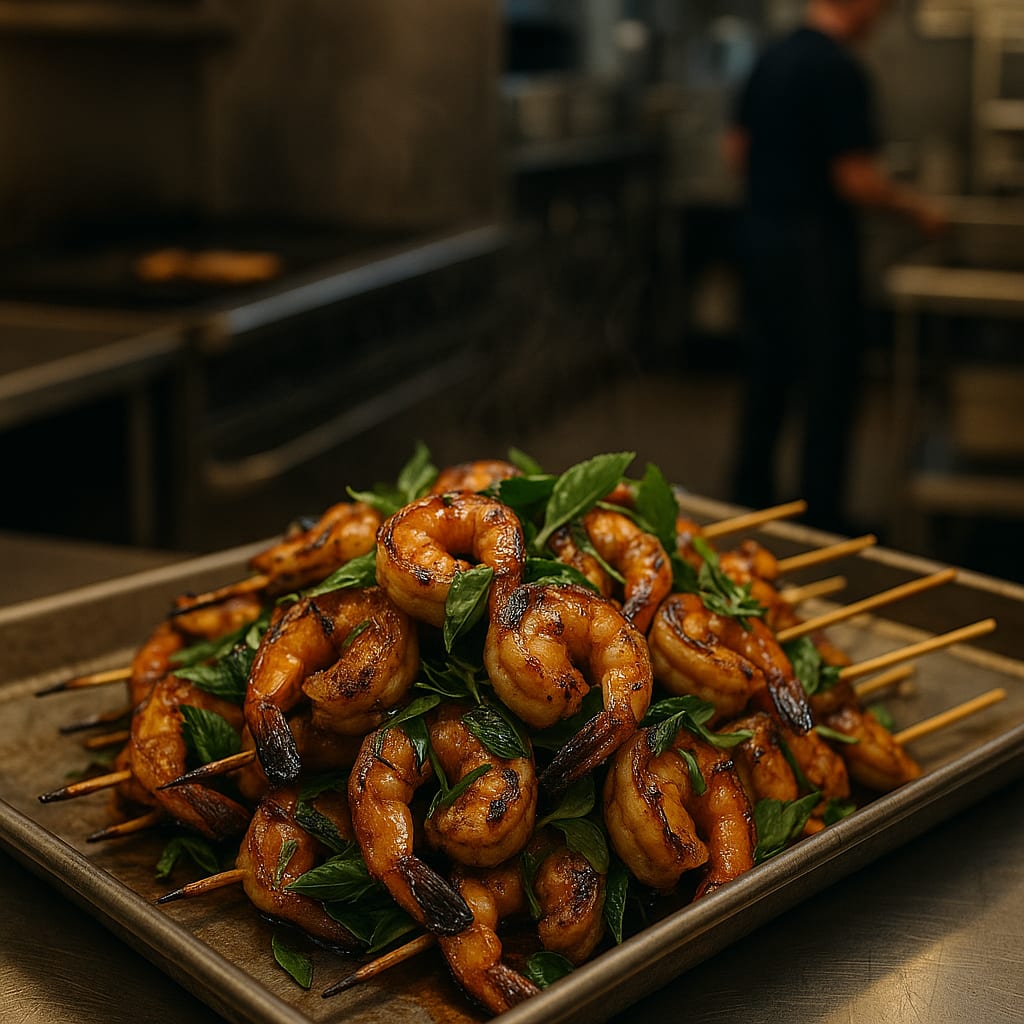
Palm Sugar Lime Shrimp Skewers
Palm sugar–lime glazed jumbo shrimp with Thai basil, fried shallots, and char for ten
Shrimp skewer night—palm sugar lime lacquer, fast char, no generic kabob repeat
Why crews like it: Ten minutes of fire from grate to platter, and the sweet-hot lacquer with crunchy fried shallots makes these vanish faster than any kebab night — the kind of cook you can still start when a tone feels likely.
561Cal
51gProtein
17gCarbs
31gFat
Ingredients
- 4 Lb Gulf Colossal Shrimp
- 1/3 Cup Palm Sugar
- 6 whole Kaffir Lime Leaves
- 2 Tbsp Nam Pla
- 1 Tbsp Tamarind Concentrate
- 2 whole Thai Bird Chilies
- 2 whole Shallots
- 3 whole Limes
- 1/2 Cup Thai Basil
- 1/2 Cup Fried Shallots
- 2 Tbsp Grapeseed Oil
Instructions
- Simmer the palm sugar glaze: Melt the palm sugar with 2 tablespoons of water in a small saucepan over medium-low, then stir in the nam pla, tamarind concentrate, minced Thai bird chilies, and shredded kaffir lime leaves. Simmer 3–4 minutes until it coats the back of a spoon, then pull it — it thickens more as it cools, and a glaze that sets hard drags off the brush. You want sweet, salty, sour, and hot fighting each other in one spoonful.
- Marinate the shrimp — 30 minutes, no longer: Toss the shrimp with the minced shallots, the juice of two limes, a tablespoon of the glaze, and a pinch of salt, then refrigerate 20–30 minutes. Set a timer: lime acid starts cooking the outside like ceviche past the half hour, and over-marinated shrimp turn mushy over the fire instead of snapping.
- Thread them flat: Thread 4–5 shrimp per skewer, running the point through both the thick head end and the tail of each one so they lie flat — flat shrimp make full contact and char, while curled shrimp bridge the grate and steam in their own gaps. Pat the loaded skewers dry with paper towel; surface water is the enemy of char on a two-minute cook.
- Get the grate screaming and slicked: Preheat the grill to high, 450–500°F at the grate, lid down for 8 minutes. Scrub the grates clean, then wipe them with grapeseed oil on a folded paper towel held in tongs — grapeseed's high smoke point survives where olive oil burns to varnish. At this heat, anything that sticks tears.
- Grill the shrimp two minutes a side: Lay the skewers over direct heat and grill 2 minutes per side. Done is pink with charred edges, opaque all the way through, and 145°F on an instant-read thermometer in the thickest shrimp — colossal shrimp can hide a translucent center behind a charred shell, so always check the fattest one. Thirty seconds past that and they start turning to erasers.
- Lacquer with glaze over the flame: Brush the glaze on both sides of the skewers and give them 30 seconds per side more, until sticky and glossy with a few caramelized spots. Palm sugar scorches fast — if flames chase the drips, slide the skewers to the cooler edge and finish there. Glazing at the end keeps the char clean and the lacquer bright.
- Shower with basil and fried shallots: Pile the skewers on platters and scatter the torn Thai basil and fried shallots over while the shrimp are hot — the heat blooms the basil into fragrance, and the shallots only stay crunchy if they land at service. Lime wedges on the side; about 8 oz of shrimp per firefighter.
- Hold for call interruptions: If tones drop mid-cook: turn off direct heat and cover the shrimp skewers — hold at 140°F in a warm cabinet or 200°F oven, never below 140°F for more than 30 minutes cumulative. Log hold time on the pan with a grease pencil. If tones drop after service, cover hot food and keep sides on low heat or ice as appropriate. On return, spot-check proteins at safe internal temp before reopening the line.
- Pack down leftovers safely: Cool the shrimp skewers and hot components in shallow hotel pans within two hours — deep pots stay in the danger zone too long. Label with date; reheat proteins to 165°F minimum before second shift. Store cold components separately so textures survive overnight.
Tonight's spread
- Main: palm sugar lime shrimp skewers with Thai basil and fried shallots
- Sides: coconut rice, quick cucumber salad
- Condiments: lime wedges, reserved glaze as a dip
- Set hot components closest to the crew; cold crunch and toppings at the far end of the line.
- Keep a backup tray at 200°F for firefighters returning from a run.
Hall tips
- Set a timer on the marinade — lime acid ceviches the surface past 30 minutes and the texture never recovers.
- Palm sugar glaze sets hard as it cools; 20 seconds back over low flame loosens it before brushing.
- No kaffir lime leaves? Double the lime zest into the glaze — different perfume, same lift.
- Keep a backup tray at 200°F for firefighters returning from a run — never serve picked-over pans to late crew.
- Taste for salt at the end — hall palates run salty after long shifts.
- Log hold times on the pan with a grease pencil when tones drop mid-service.
- Spot-check proteins with an instant-read thermometer before reopening the line after a call.
Substitutions
- Honey swaps 1:1 for palm sugar with a squeeze of sriracha for heat — that's the classic honey-sriracha version of this same skewer.
- Any fish sauce is nam pla — use whatever bottle the pantry has.
- Jumbo (21/25) shrimp work fine; drop to 90 seconds per side and watch the 145°F mark.
- One serrano stands in for two bird chilies at about half the heat.
Meal prep
The glaze holds a week refrigerated — make it ahead and reserve some clean for dipping. Marinate 20–30 minutes max, thread flat, grill 2 minutes a side at 450°F+, glaze in the final minute. Hold covered no more than 12 minutes or the shrimp tighten.
Leftovers
- Cool the shrimp skewers in shallow pans within two hours; label with date and reheat to 165°F before second shift.
- Store cold sides separately — hot and cold stacked overnight ruins texture.
- Leftover shrimp eat better cold than reheated — pull them for lettuce wraps or toss into fried rice off the heat at the end.
- gas or charcoal grill
- metal or soaked bamboo skewers
- instant-read thermometer
- basting brush
- small saucepan
- hotel pans
- tongs
Related recipes
- Honey Chipotle Grilled Chicken Thighs
- Smoked Chicken Quarters with White Sauce
- Brisket-Style Beef Sandwiches