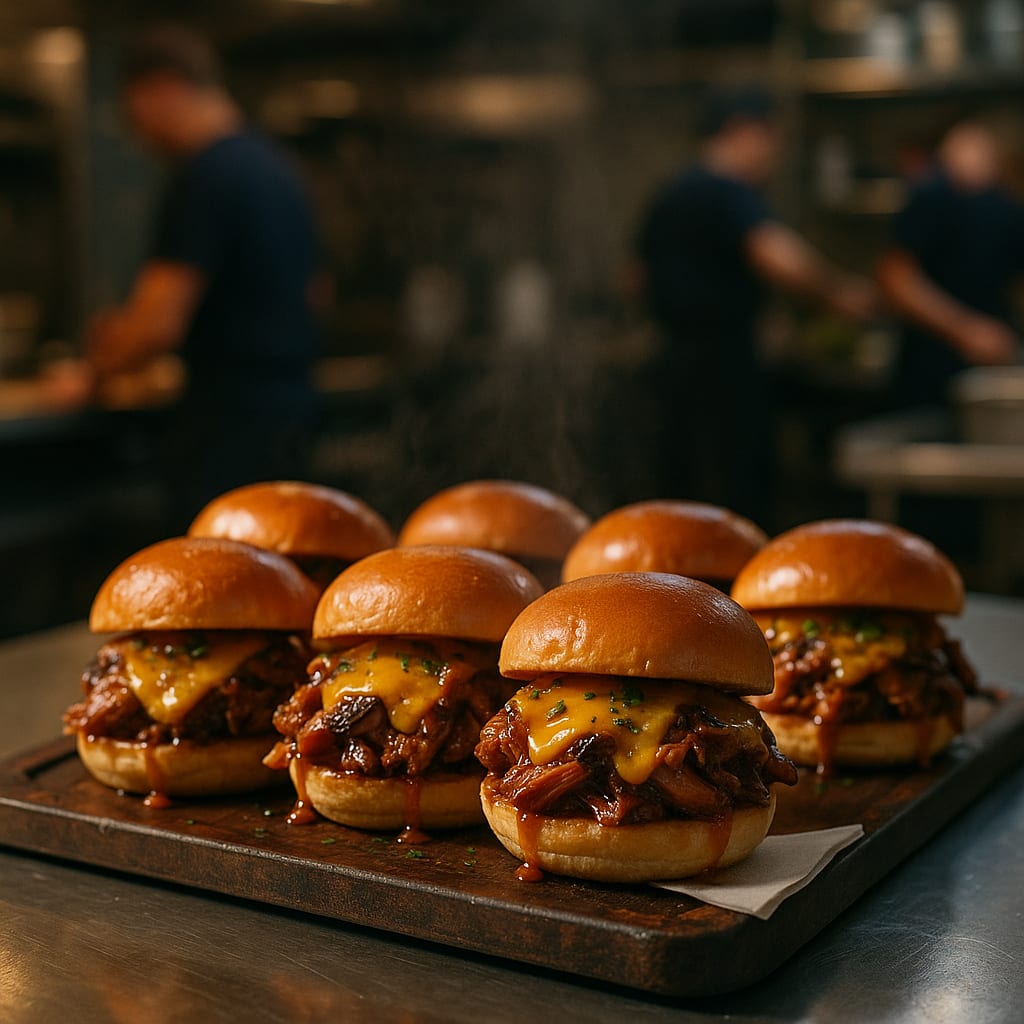
BBQ Chicken Sliders
Sweet-smoky sliders for a hungry line
Thighs simmered right in doctored BBQ sauce until they shred, piled on butter-toasted Hawaiian rolls with vinegar slaw and pickles. The braising liquid becomes the sauce, so nothing gets poured down the drain.
Why crews like it: Three-bite sandwiches with hot saucy meat, cold crunchy slaw, and a buttered crisp bun — a tray of 24 disappears before the second sheet finishes toasting.
825Cal
47gProtein
53gCarbs
45gFat
Ingredients
- 4 Lb Boneless Skinless Chicken Thighs
- 2 packs Slider Rolls (Hawaiian-style, 12-count pack)
- 3 Cups BBQ Sauce
- 1 Cup Chicken Broth
- 3 Tbsp Apple Cider Vinegar
- 2 Tbsp Brown Sugar
- 1 Tbsp Smoked Paprika
- 1 Tbsp Garlic Powder
- 1 Tbsp Kosher Salt
- 2 bags (14 oz) Coleslaw Mix (bagged)
- 0.75 Cup Mayonnaise
- 2 Cups Dill Pickle Chips
- 4 Tbsp Unsalted Butter (melted)
Instructions
- Season the thighs while the pot heats: Pat the chicken thighs dry and season all over with the smoked paprika, garlic powder, and kosher salt — seasoning the meat itself, not just the sauce, is why the shred tastes like BBQ all the way through instead of sauce-coated plain meat. Set the heavy pot over medium heat while you work.
- Simmer the thighs in sauce until they shred: Nestle the thighs into the pot with 2 cups of the BBQ sauce and the chicken broth, cover, and hold a gentle simmer — small lazy bubbles, never a hard boil, which seizes the meat tight. Cook 25–30 minutes: the thighs pass the safe 165°F mark early, but keep going until an instant-read thermometer shows about 190°F, where the connective tissue melts and a fork twists through with no resistance.
- Shred the meat while it's hot: Lift the thighs to a sheet tray with the slotted spoon and pull them apart with two forks into rough, bite-size shreds — or drop them in the stand mixer with the paddle for 20 seconds on low. Shred while hot; the meat lets go easily now and drinks sauce back up, where cooled meat fights the forks and stays dry.
- Reduce the pot liquid into the real sauce: Turn the pot to medium-high and let the braising liquid bubble hard 5–8 minutes with the last cup of BBQ sauce, the apple cider vinegar, and the brown sugar, until it coats a spoon and a swipe across the back holds a line. The vinegar cuts the sweetness so the third slider tastes as good as the first. Fold the shredded meat back in and drop the heat to its lowest setting.
- Toss the vinegar slaw and chill it: In the big bowl, toss the coleslaw mix with the mayonnaise, a splash of cider vinegar, and a pinch of salt until every shred is coated but not soupy. Park it in the fridge until build time — at least 10 minutes takes the raw edge off the cabbage, and cold crunchy slaw against hot meat is the whole point of this sandwich.
- Butter and toast the rolls: Split the slider rolls, keeping each 12-pack sheet connected — they toast and move as one piece. Brush the cut faces with melted butter and toast on the griddle or under a 400°F oven for 3–4 minutes until golden at the edges. That toasted face is a moisture barrier; skip it and the first saucy scoop soaks the bread into mush.
- Build the sliders bottom-up: Lift the meat with the slotted spoon so excess sauce drains back into the pot — the number-one slider mistake is drowning the bun. Layer each roll with a solid pinch of meat, two dill pickle chips, and a small mound of slaw, then cap it. Work in full sheets of 12 on trays; it goes five times faster than one sandwich at a time.
- Send trays out while the buns are crisp: Serve within 10 minutes of building — these have about a 20-minute window before the slaw wilts warm and the bottom bun gives up. Keep the pot of extra meat on the lowest heat with a lid so the second and third rounds go out just as hot as the first tray did.
- Hold for call interruptions: If tones drop mid-cook: turn off direct heat and cover the pulled chicken — hold at 140°F in a warm cabinet or 200°F oven, never below 140°F for more than 30 minutes cumulative. Log hold time on the pan with a grease pencil. Keep the vinegar slaw in the fridge, not on the counter — it's already dressed and needs to stay cold and crisp, not sit next to a warm pan. On return, spot-check the chicken at a safe internal temp before reopening the line.
- Pack down leftovers safely: Cool pulled chicken and hot components in shallow hotel pans within two hours — deep pots stay in the danger zone too long. Label with date; reheat proteins to 165°F minimum before second shift. Store cold components separately so textures survive overnight.
Tonight's spread
- Main: BBQ pulled chicken sliders on toasted Hawaiian rolls
- Sides: vinegar slaw, dill pickle chips, kettle chips if the pantry has them
- Condiments: extra warmed BBQ sauce for the double-dippers
- Set hot components closest to the crew; cold crunch and toppings at the far end of the line.
- Keep a backup tray at 200°F for firefighters returning from a run.
Hall tips
- Thighs, not breasts — breast meat shreds into dry strings in a braise; thighs stay juicy through the simmer, the hold, and the reheat.
- Take the meat well past 165°F to about 190°F before shredding — that's where thigh collagen turns to gelatin and the forks glide.
- If the pot sauce tastes flat at the end, it wants another splash of cider vinegar before it wants more sugar or salt.
- Keep a backup tray at 200°F for firefighters returning from a run — never serve picked-over pans to late crew.
- Taste for salt at the end — hall palates run salty after long shifts.
- Log hold times on the pan with a grease pencil when tones drop mid-service.
- Spot-check proteins with an instant-read thermometer before reopening the line after a call.
Substitutions
- Rotisserie shortcut: fold 2.5 lb pulled rotisserie meat into the reduced sauce and skip the simmer — dinner lands in 25 minutes.
- Regular burger buns work if slider rolls are gone — makes 8 full-size sandwiches; toast them the same way.
- Greek yogurt swaps 1:1 for the mayonnaise in the slaw — tangier, lighter, and nobody has ever noticed.
- No cider vinegar? White vinegar plus an extra pinch of brown sugar lands close enough.
Leftovers
- Cool pulled chicken in shallow pans within two hours; label with date and reheat to 165°F before second shift.
- Store cold sides separately — hot and cold stacked overnight ruins texture.
- Never store built sliders — keep meat, slaw, and rolls separate and the second shift eats as well as the first.
- Reheat the meat in a covered pan with a splash of broth or water; day-two sauce thickens and scorches fast over bare heat.
- Dutch oven or wide heavy pot with lid
- Two forks or a stand mixer with paddle for shredding
- Griddle or sheet trays for toasting rolls
- Slotted spoon
- Large mixing bowl
- Instant-read thermometer
- Aluminum foil
Related recipes
- Beer Can Chicken
- Smoked Wings with White Sauce
- BBQ Chicken Pizza
- Chicken Meal Prep Trays
- Buffalo Chicken Dip
- BBQ Burnt Ends