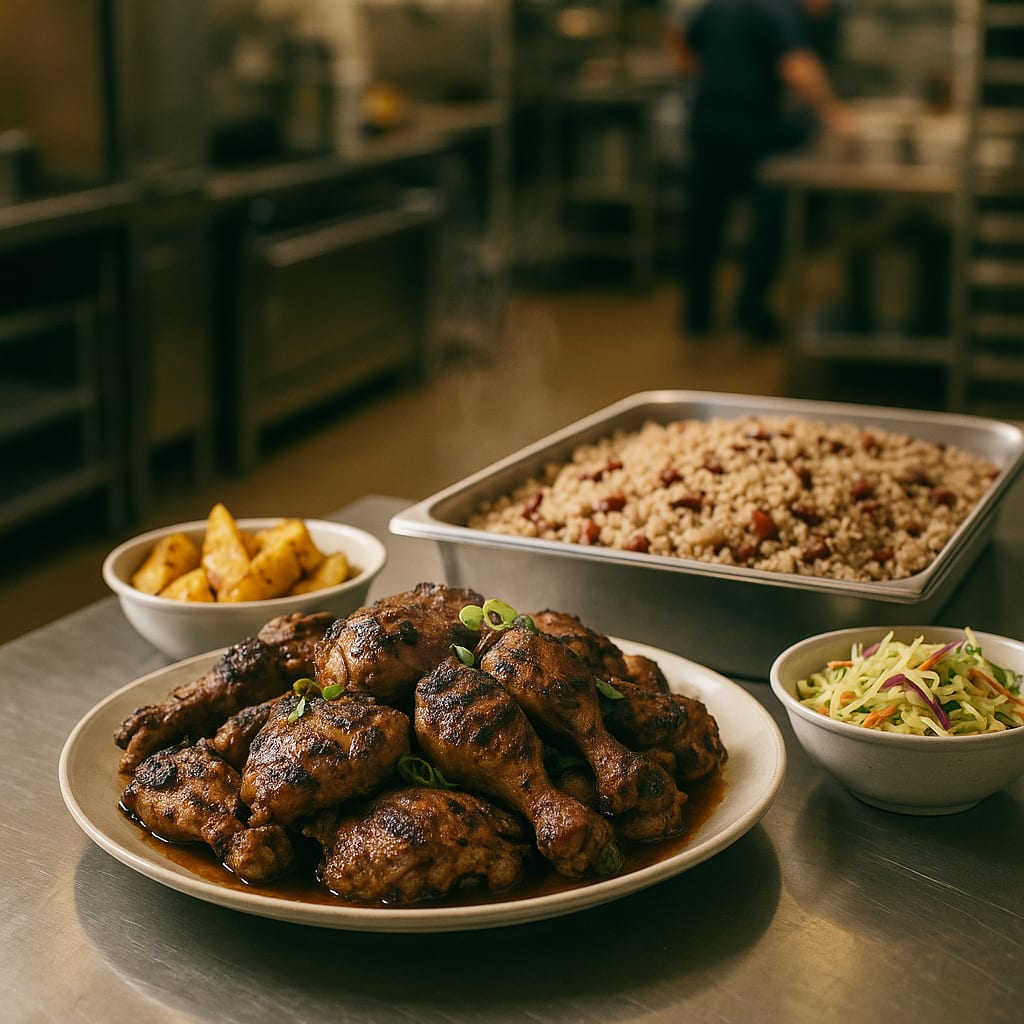
Jerk Chicken & Rice and Peas
Charred jerk thighs, coconut rice and peas, island sides for eight
Island heat that still feeds eight. Sized for a full crew, with timing that still works when the kitchen gets interrupted.
Why crews like it: Island heat that still feeds eight. A hall pick for regular dinner nights — one line, real portions, no drama at the stove.
1087Cal
111gProtein
125gCarbs
15gFat
Ingredients
- 5 Lb Bone-In, Skin-On Chicken Thighs
- 2 count Scotch Bonnet Peppers
- 8 count Green Onions
- 3 Tbsp Fresh Thyme Leaves
- 10 count Garlic Cloves
- 3 Tbsp Fresh Ginger, Grated
- 2 Tbsp Ground Allspice
- 3 Tbsp Brown Sugar
- 3 Tbsp Soy Sauce
- 4 Tbsp Fresh Lime Juice
- 3 Cups Long-Grain White Rice, Rinsed
- 2 cans Kidney Beans, Drained
- 2 cans Full-Fat Coconut Milk
- 2 Cups Low-Sodium Chicken Stock
- 1 count Fresh Pineapple, Peeled
- 2 Lb Coleslaw Mix
Instructions
- Trim and prep the chicken: Pat the chicken thighs dry and trim ragged fat, leaving the skin on — it shields the meat from direct flame and crisps into the best bite on the plate. Score the skin side lightly in a crosshatch so the marinade soaks in instead of sitting on top. Lay the thighs in hotel pans or zip bags. Wear gloves from here on: scotch bonnet oil stays on your hands through two dish shifts.
- Blend the jerk marinade: Blend the Scotch bonnets (seeds in for full island heat, seeds out for a milder pot), green onions, thyme, garlic, ginger, allspice, brown sugar, soy sauce, lime juice, and a splash of neutral oil until mostly smooth — a little texture is right; jerk is a paste, not a juice. Allspice and thyme are the backbone of real jerk; the scotch bonnet is heat on top of them, not the whole story. Taste a rice-grain amount on a spoon tip: it should hit sweet, then herbal, then burn.
- Marinate the chicken: Massage the marinade over and under the skin so the paste sits directly on the meat. Marinate at least 45 minutes in the fridge; 4–12 hours is where jerk gets serious — salt and lime work into the thigh instead of coating it. Keep raw-chicken pans on the bottom shelf so nothing drips onto ready-to-eat food.
- Set up two zones of heat: On the barbecue, build a two-zone fire at about 375°F — a direct side for char, an indirect side to finish gently. Indoors, set 425°F with foil-lined sheet pans and wire racks so air circulates underneath. The brown sugar in the marinade scorches fast over direct flame; the two-zone setup is what keeps jerk mahogany instead of black.
- Start coconut rice and peas: Simmer the rinsed rice with kidney beans, coconut milk, the stock, two whole green onions, and a thyme sprig, covered, 18–20 minutes until the liquid absorbs and the rice is tender. Don't stir mid-cook — stirring bursts starch and turns coconut rice gummy. Fluff with a fork, pull the onion and thyme stems, and hold covered at 200°F.
- Grill or roast the chicken: Lay thighs skin-side down over direct heat 3–4 minutes until the skin chars in spots and releases from the grate on its own, then move to the indirect side (or the 425°F oven) 25–30 minutes until the thickest thigh reads 165°F internal temp on an instant-read thermometer at the bone. Char is flavor; black is bitter — if flare-ups lick the skin, move the piece, don't fight the flame. Thighs forgive: even 175°F stays juicy, which is why jerk night survives a mid-cook call.
- Rest the chicken: Tent loosely with foil and rest 10 minutes — juices redistribute so the first cut doesn't bleed the pan dry, and the crust sets so the jerk bark stays on the skin instead of the cutting board.
- Grill pineapple and dress the slaw: Grill the pineapple rings over direct heat 2–3 minutes per side until caramel grill marks show — the sugar chars fast, so stand by. Toss the coleslaw mix with lime juice, a pinch of salt, and a splash of oil; keep it cold on ice. Sweet char and cold crunch are what balance scotch bonnet heat on the plate.
- Coordinate timing for service: Leave thighs whole — the bone does the carving work — or slice for a faster line. Rice and peas in the first hotel pan, jerk thighs in the second, pineapple and slaw at the cold end. Hold hot pans at 140°F or above until the crew hits the line.
- Hold for call interruptions: Bone-in thighs are the reason jerk night survives a call — they stay juicy even past 175°F. If tones drop, pull thighs to the indirect side or a covered pan and hold at 140°F or above; the coconut rice holds covered at 200°F. On return, confirm thighs read 165°F and give them 2–3 minutes back over direct heat to wake the crust up before serving.
- Serve the hall line: Open the line with rice and peas first, jerk chicken over it, then pineapple, slaw, hot sauce, and lime wedges at the end. Call the crew while the skin still has crackle — jerk keeps its flavor on hold but loses that crisp inside 20 minutes.
- Pack down leftovers safely: Cool jerk chicken and hot components in shallow hotel pans within two hours — deep pots stay in the danger zone too long. Label with date; reheat proteins to 165°F minimum before second shift. Store cold components separately so textures survive overnight.
Tonight's spread
- Main: Jerk chicken thighs
- Sides: coconut rice and peas, grilled pineapple, sharp cabbage slaw
- Condiments: hot sauce, lime wedges
- Set hot components closest to the crew; cold crunch and toppings at the far end of the line.
- Keep a backup tray at 200°F for firefighters returning from a run.
Hall tips
- Bone-in, skin-on thighs forgive the grill far better than breasts — critical on call-heavy nights.
- Allspice and thyme are the backbone of real jerk; the scotch bonnet is the heat on top, not the whole story.
- Shake the coconut milk cans before opening and don't stir the rice mid-cook — stirring bursts the starch and turns it gummy.
- Char is flavor, black is bitter — move pieces off flare-ups instead of fighting the flame.
- Wear gloves through the whole marinade step; scotch bonnet oil lingers on your hands for hours.
Substitutions
- Chicken thighs ↔ breasts (thighs forgive overcooking on the flat-top).
- No scotch bonnets at the store? Habaneros are the closest swap — same heat family, slightly less fruit.
- Canned pineapple rings work in a pinch; pat them dry hard or they steam instead of char.
- Optional upgrade: a smoking pouch of pimento (allspice) berries on the coals is the closest a hall gets to Boston Bay.
Leftovers
- Cool leftovers in shallow containers within two hours — deep pots stay hot too long.
- Label trays with date and reheat to 165°F minimum before second shift.
- Slice cold protein thin for next-day wraps or salads — faster reheat, less dry-out.
- Grill or flat-top
- Tongs
- Heat-resistant gloves
- Large sheet trays
- Instant-read thermometer
- Aluminum foil
Related recipes
- Crispy Chicken Cutlets Marinara
- BBQ Chicken Bowls
- Chicken Caesar Salad
- Chicken Parmesan
- Parm Hero Subs
- Chicken Souvlaki